




Why should you clean plastic regularly?
Plastic is low-maintenance, but not maintenance-free. Outdoor surfaces are exposed to dust, sand, bird droppings, green growth, exhaust fumes and other dirt. Contamination can accumulate particularly in corners, along rubber seals and underneath window-frame profiles.
Cleaning plastic regularly prevents dirt from adhering more firmly to the surface. It also helps retain the original appearance of window frames, fascia boards and cladding panels for longer. How often cleaning is needed depends on the location of the home, weather conditions and the amount of traffic, trees or birds nearby.
Preferably remove bird droppings and heavy localised dirt promptly. If contamination is left for a long time, it may become more difficult to remove and require more intensive cleaning.
Telescopic poles for plastic window frames
-
Added to wishlist
-
-
Added to wishlist
-
-
Added to wishlist
-
-
Added to wishlist
-








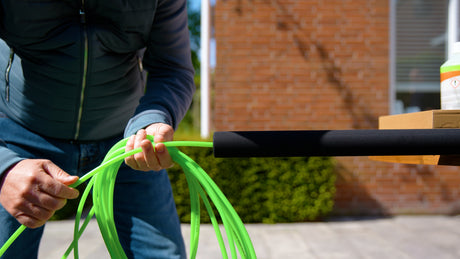

Cleaning plastic in 6 steps
- Inspect the surface. Check whether the plastic is damaged, weathered or porous. On window frames, also inspect the rubber seals, sealant joints and connections.
- Rinse away loose dirt. First remove sand, dust and other loose dirt with clean water. This prevents dirt particles from being moved across the surface while brushing.
- Wet the plastic completely. Water helps soak and loosen dried-on dirt. Preferably avoid working on a very hot surface in full sun.
- Apply a mild cleaning agent. Only use a product suitable for plastic. If in doubt, test it first on a small, inconspicuous area.
- Brush calmly from top to bottom. Use a soft brush and do not apply unnecessarily high pressure. Pay extra attention to edges, corners and undersides.
- Rinse thoroughly. Remove all loosened dirt and residual cleaning agent with clean water. Low-limescale or pure water can reduce the likelihood of visible drying marks.
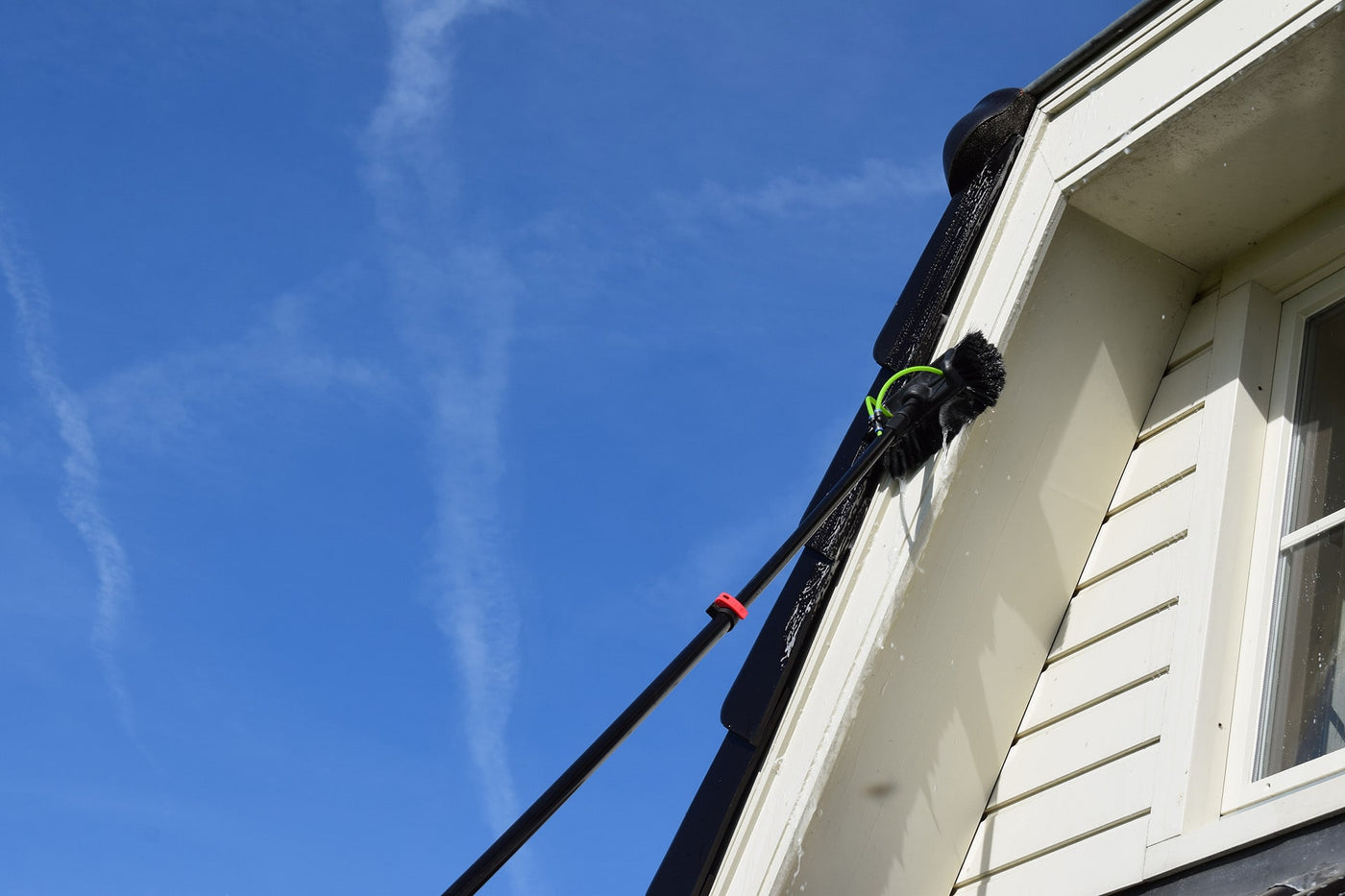
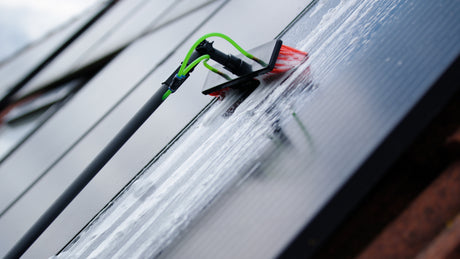
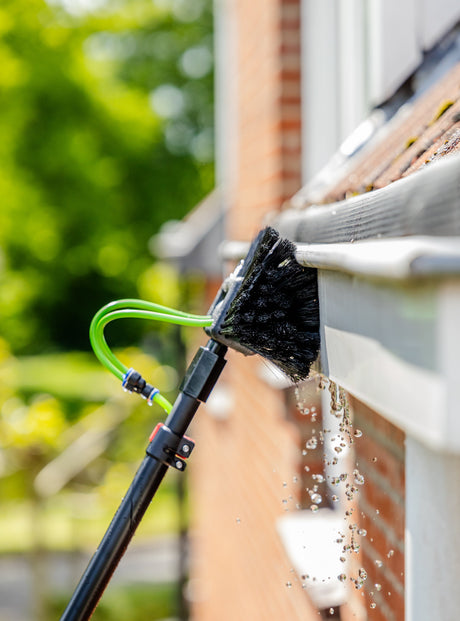
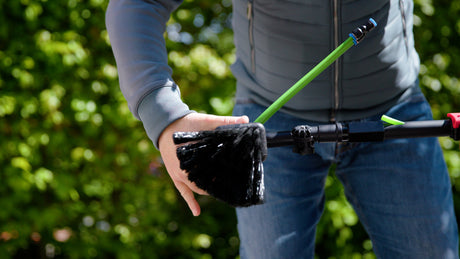
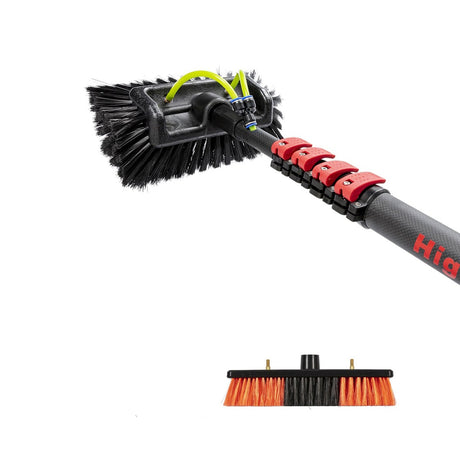
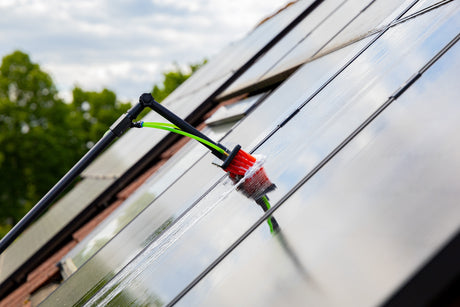
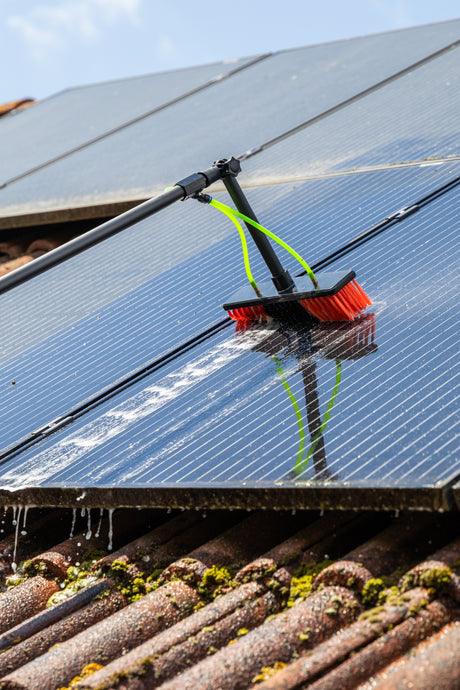
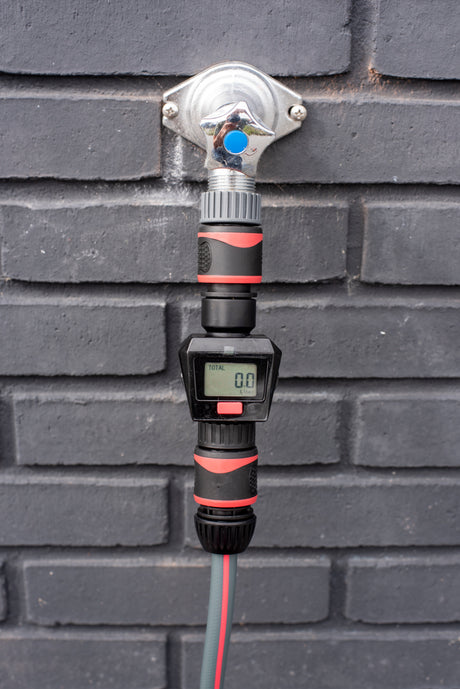
For high plastic window frames and fascia boards, a water-fed telescopic pole is practical. Water flows through the pole to the brush, allowing you to rinse while brushing. Thanks to bristles on several sides, a five-sided brush also reaches frame profiles, edges and undersides.

Which cleaning product should you use for plastic?
For plastic, preferably use a mild cleaning agent that the product information states is suitable for this material. A strong product does not automatically clean better and may damage a coating, gloss layer, rubber seal or sealant joint.
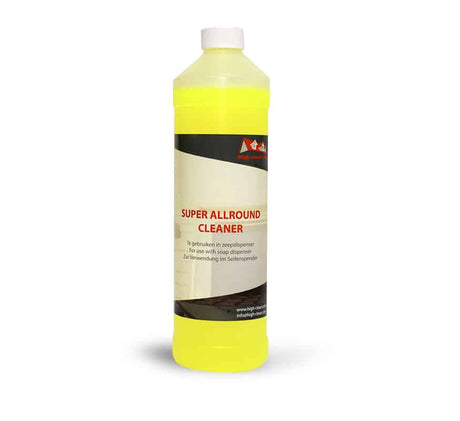
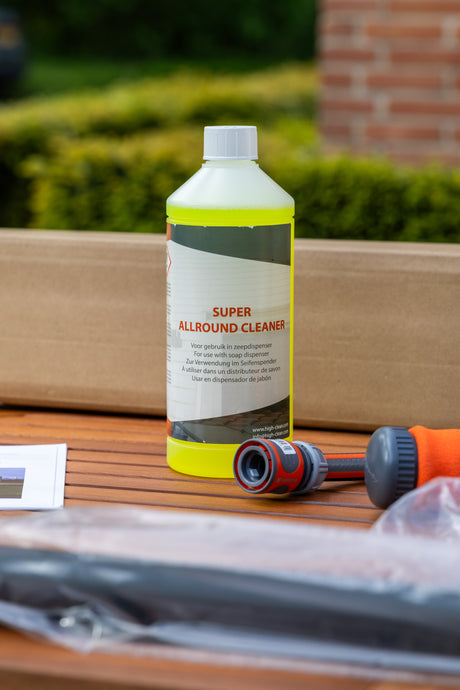
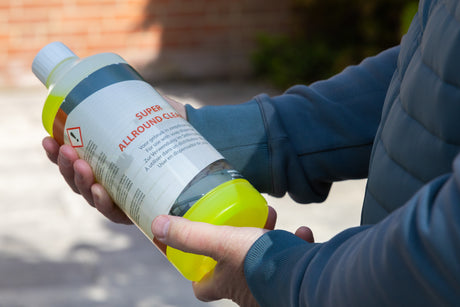
According to the product information, Super Allround Cleaner is suitable for applications including plastic fascia boards, tongue-and-groove cladding and roller shutters. When using a telescopic pole, you can add the product to the water through a soap dispenser. Then switch to clean water to rinse the surface thoroughly.
Cleaning plastic with vinegar
Vinegar is often mentioned as a household remedy, but it is not automatically suitable for every plastic surface. It may adversely affect certain coatings, rubber seals, sealant joints and adjacent materials. Only use vinegar if the manufacturer of the window frame or surface permits it.
Cleaning plastic window frames with ammonia
Ammonia is not a good standard choice for plastic window frames. It may be too aggressive for the plastic, finish or seals. Start with water and a mild cleaner suitable for plastic. Never mix ammonia with other cleaning products.
Which products should you avoid?
Do not use acetone, chlorine, methylated spirits, scouring powder, scouring pads or hard brushes on plastic window frames. These products and materials can cause scratches, dull patches or permanent damage. Also take care when using a pressure washer around joints, rubber seals and ventilation openings.

Removing black streaks and discolouration from plastic window frames
Black streaks on plastic window frames often consist of a combination of dirt, rainwater and environmental pollution. First wet the surface thoroughly and allow the contamination to soak briefly. Then apply a mild cleaning agent, brush the area gently and rinse thoroughly.
Repeat the treatment if a streak does not disappear immediately. Brushing harder or switching to an aggressive product increases the risk of damage and does not always produce a better result.
Cleaning white plastic window frames
Grey deposits, black streaks and discolouration are quickly visible on white frames. Start with the mildest method here as well. Clean the entire component instead of only one small area, so there is no visible difference between the treated and untreated sections.
Can yellowed plastic be made white again?
That depends on the cause. Surface dirt and deposits can often be removed. Discolouration caused by UV radiation, ageing or changes in the material lies deeper and usually cannot be removed by cleaning. In that case, do not keep scrubbing harder; have the plastic assessed if necessary.

Rinsing plastic without visible limescale marks
After cleaning, drying marks may appear on dark or glossy plastic. These are often caused by limescale and other dissolved minerals in tap water. The effect varies according to water quality and the surface.
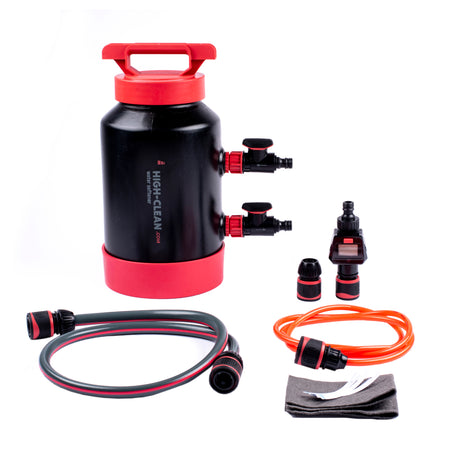
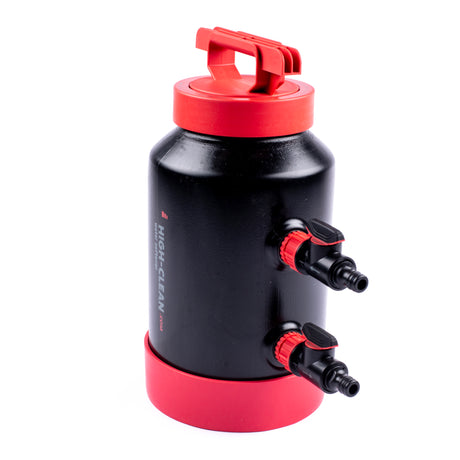
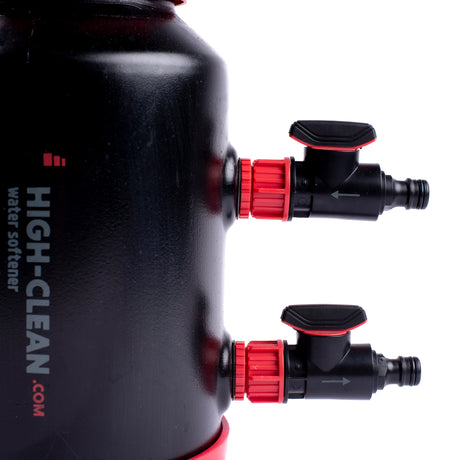
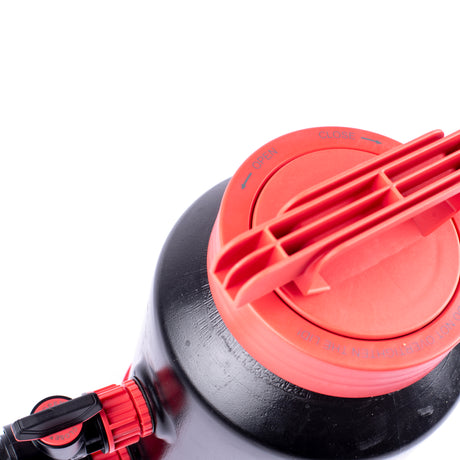
The Water Softener HCWS528 mainly removes calcium and magnesium from the water. This reduces the likelihood of visible limescale residue. Other dissolved minerals may remain in the water.
The Pure Water HCPW557 removes virtually all dissolved minerals and salts through deionisation. This is particularly relevant for high plastic window frames, smooth cladding panels and fascia boards that cannot easily be dried after rinsing.
For light contamination, you can work using only pure water and a suitable brush. For greasy or stubborn deposits, first use a cleaning agent suitable for plastic and then Pure Water for the final rinse. See the Water Softener and Pure Water comparison to choose the appropriate system.
Water treatment and cleaning products for plastic
-
Added to wishlist
-
-
Added to wishlist
-
-
Added to wishlist
-
-
 Added to wishlist


Cleaning high plastic window frames from the ground
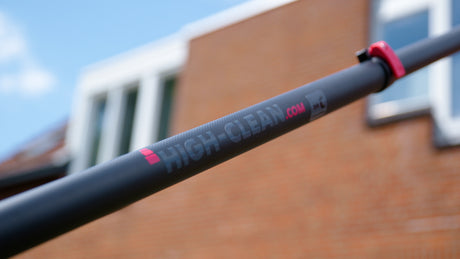
With a telescopic pole, you can reach high window frames, fascia boards and overhangs without continually moving a ladder while cleaning. Choose the length based on the working height, your own height and the angle at which you use the pole.
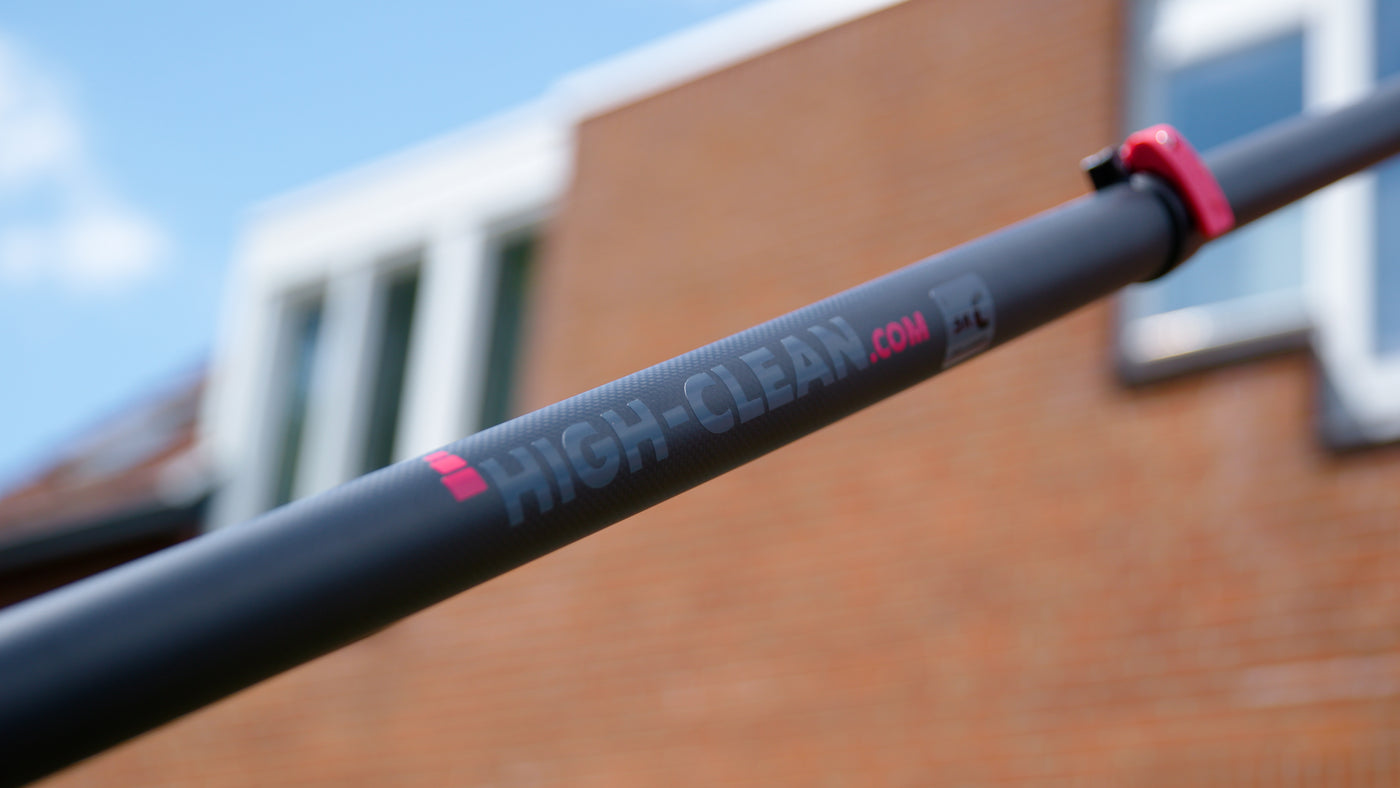
Aluminium is a practical choice for general and occasional use. The aluminium telescopic pole with five-sided brush is available in different lengths.
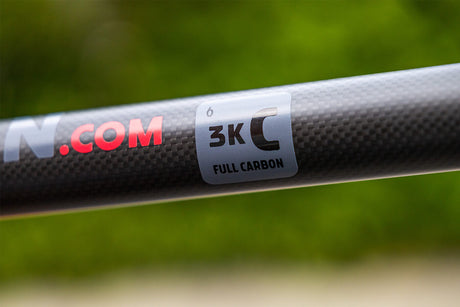
Carbon Fiber is lighter than aluminium and therefore more comfortable when working for longer. For greater heights and intensive use, the 3K Full Carbon telescopic pole with five-sided brush provides a lighter and stiffer material option.
Leave each section partially inserted while working for greater stability. Unsure about the material or length? Use the telescopic-pole advisor tool.
Frequently asked questions about cleaning plastic
What is the best way to clean plastic?
What is the best way to clean plastic?
Plastic is best cleaned with water, a mild cleaning agent suitable for plastic and a soft brush. Always start with the mildest method and test a new product on an inconspicuous area first.
How can you clean plastic window frames?
How can you clean plastic window frames?
First rinse away sand and loose dirt. Wet the frame, apply a mild cleaning agent and brush calmly from top to bottom. Also clean the edges, corners and underside, then rinse the frame thoroughly.
Can you clean plastic with vinegar?
Can you clean plastic with vinegar?
Vinegar is not suitable for every type of plastic, coating, rubber seal or sealant joint. Only use it when the surface manufacturer permits this. A cleaning agent suitable for plastic is a better standard choice.
Can you clean plastic window frames with ammonia?
Can you clean plastic window frames with ammonia?
Ammonia is not recommended as a general cleaner for plastic window frames. It may damage the surface, coatings or seals. Preferably use a mild product that is expressly suitable for plastic.
How do you remove black streaks from plastic window frames?
How do you remove black streaks from plastic window frames?
First wet black streaks and allow the dirt to soak briefly. Then use a mild cleaning agent and a soft brush. Rinse well and repeat the treatment if the streak does not disappear immediately.
How do you get white plastic window frames clean again?
How do you get white plastic window frames clean again?
Clean white frames from top to bottom with water and a mild cleaning agent. Treat the entire component for an even result. Persistent yellowing caused by ageing usually cannot be removed through cleaning.
How often should you clean plastic window frames?
How often should you clean plastic window frames?
The right frequency depends on the surroundings. Inspect the frames at least several times a year and clean them as soon as dirt, bird droppings, green growth or black streaks become visible.
Can you clean plastic with a pressure washer?
Can you clean plastic with a pressure washer?
A pressure washer can force water into joints, ventilation openings and connections. It can also place strain on rubber seals or damaged surfaces. Around plastic window frames, preferably use a soft brush with a controlled water supply.
How do you prevent limescale marks after cleaning?
How do you prevent limescale marks after cleaning?
Rinse the surface thoroughly and do not allow cleaning agent to dry. With hard water, softened or pure water can reduce the likelihood of visible drying marks. Pure Water is particularly practical on high areas that are difficult to dry.
Can you make yellowed plastic white again?
Can you make yellowed plastic white again?
Surface dirt can be removed, but yellowing caused by UV radiation or material ageing usually cannot. Do not use abrasives or aggressive chemicals in an attempt to restore the original colour.