


Why should you clean solar panels?
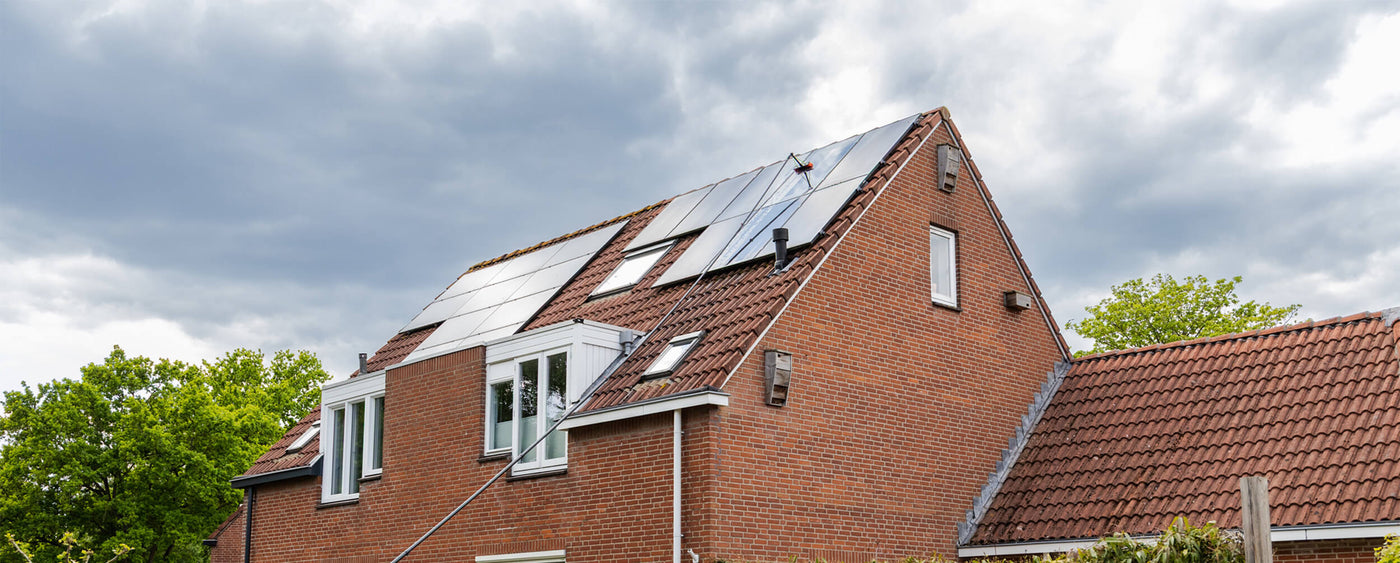
Solar panels perform best when sunlight can reach the surface unobstructed. Dust, pollen, leaves, bird droppings and green deposits can form a layer of dirt. By checking your solar panels regularly and cleaning them when necessary, you prevent dirt from building up.
Not every speck of dirt requires immediate cleaning. Loose dust is often washed away by rain. Baked-on bird droppings, deposits along the edges and dirt that has remained in place for a long time are best removed specifically with a soft brush for a telescopic pole.
Want to see straight away which pole is suitable for this job? View all telescopic poles for cleaning solar panels.
Telescopic poles for cleaning solar panels
-
Added to wishlist
-
-
Added to wishlist
-
-
Added to wishlist
-
-
Added to wishlist
-


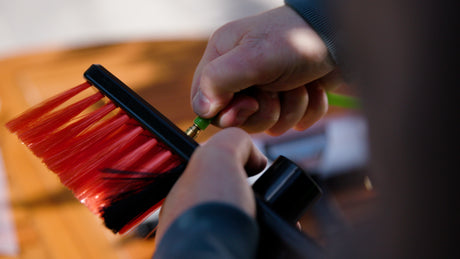
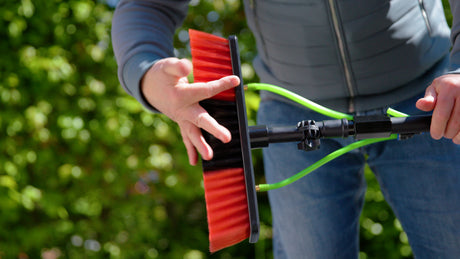


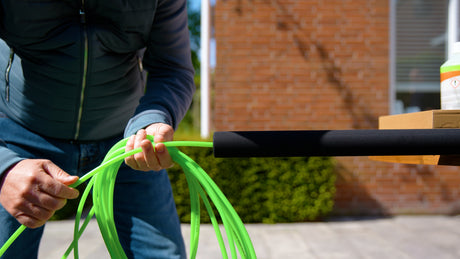

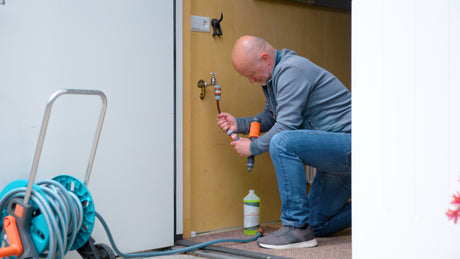


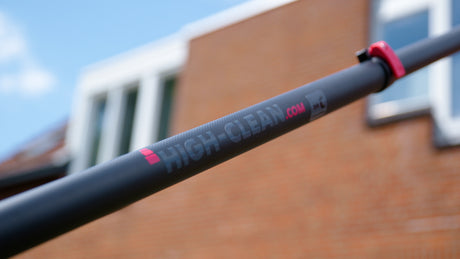

Should you clean solar panels if there is sand on them?
A thin layer of loose sand does not always need to be removed immediately. If rain is forecast, much of it may rinse off the panels naturally. Will it remain dry for a longer period, or is there bird mess and other dirt as well as sand? Then cleaning is advisable.
Never brush dry sand directly off the glass. The fine grains can abrade the surface as you brush. First rinse the sand away thoroughly with water through a telescopic pole with integrated water feed.
Need an extra hose, tap connector or another part? View all hoses and water-feed products and spare parts for telescopic poles.
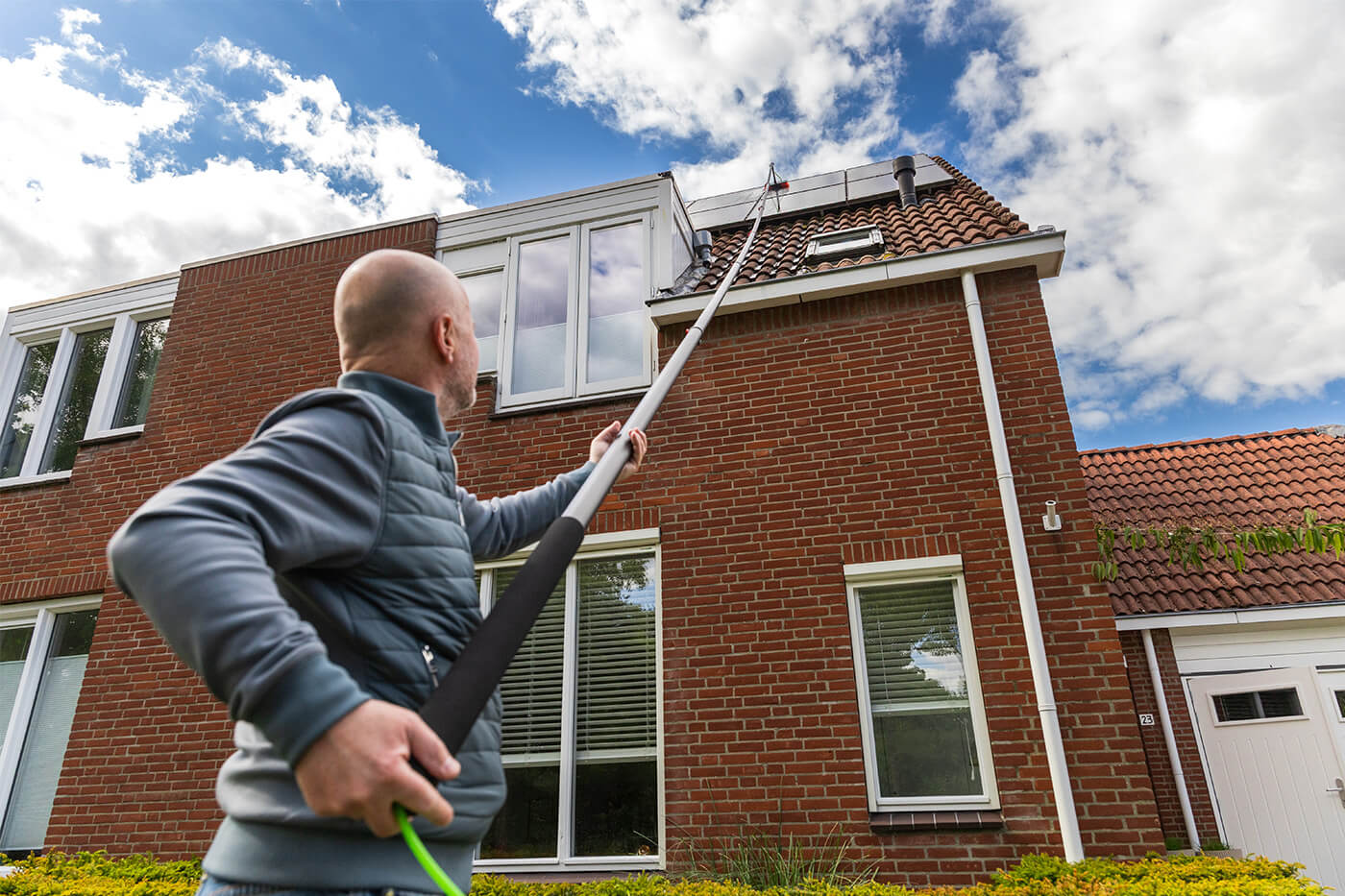

How do you clean solar panels covered in Saharan dust?
Cleaning solar panels covered in Saharan dust requires a careful approach. Rinse the panels thoroughly first so that the sand loosens and flows off the surface. Then use a telescopic pole with a soft brush and apply as little pressure as possible.
Follow these steps:
- Rinse away the loose sand with plenty of water.
- Allow stuck-on dirt to soak for a few minutes.
- Clean the panel gently with a soft telescopic brush.
- Rinse the entire surface thoroughly.
- Allow the solar panels to air-dry.
Want to reduce the risk of limescale spots? Use filtered water from the Pure Water HCPW557 system. This system filters minerals out of the water, reducing the chance of visible drying marks.
For a demonstration, also watch the video on cleaning solar panels with a telescopic pole. Avoid pressure washers, hard brushes and abrasive cleaning products.
Telescopic poles for cleaning solar panels
-
Added to wishlist
-
-
Added to wishlist
-
-
Added to wishlist
-
-
Added to wishlist
-

Cleaning your solar panels yourself
You can clean your solar panels yourself when you can safely reach every panel from the ground. An extendable telescopic pole gives you the reach you need without having to stand on a ladder or on the roof.
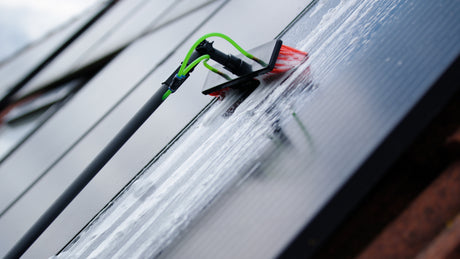
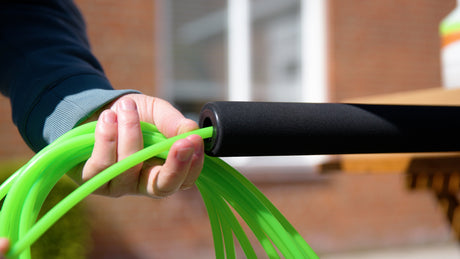
High-Clean telescopic poles feature a water hose that connects to a standard garden-hose fitting. This allows you to rinse dirt away directly while brushing. Consider the aluminium telescopic pole with all-round brush for occasional use, or the aluminium telescopic pole with five-sided brush to clean edges and sides more easily too.
Already own a telescopic pole? View the separate telescopic brushes and attachments. A separate brush lets you adapt your current set without immediately buying a completely new pole.
Not sure which length or type of material you need? Use the High-Clean selection guide or view the telescopic pole manual.
Can’t reach the panels safely from the ground? Have the work carried out by a specialist cleaning company. Safety always comes first.
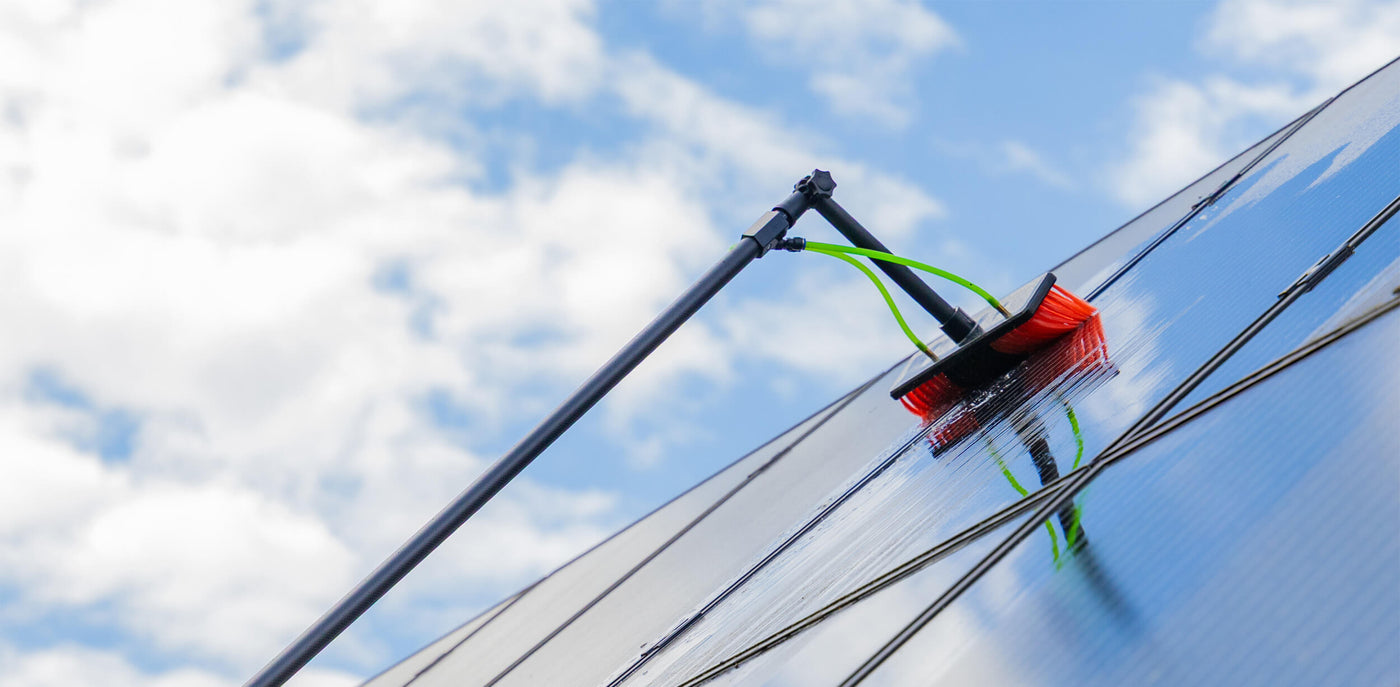

When is cleaning the panels yourself more economical?
With your own telescopic pole, you can clean your solar panels several times without hiring an external company for every clean. Cleaning them yourself is particularly worthwhile when your panels regularly become dirty due to trees, traffic, agricultural land or birds.
The best telescopic pole depends on the working height and how often you use it:
- An aluminium telescopic pole is a practical choice for occasional use.
- A Carbon Fiber telescopic pole is lighter and therefore more comfortable for longer jobs.
- A 3K Full Carbon telescopic pole offers extra rigidity and low weight for intensive or professional use.
Want a complete starter set straight away? View the aluminium telescopic pole value bundle, the Carbon Fiber value bundle or the 3K Full Carbon value bundle.
Telescopic poles for cleaning solar panels
-
Added to wishlist
-
-
Added to wishlist
-
-
Added to wishlist
-
-
Added to wishlist
-

When is the best time to clean solar panels?
Check your solar panels at least two or three times a year. A spring inspection is practical because you remove dirt before the sunnier months begin. Also check the panels after Saharan dust, prolonged dry weather, heavy pollen or frequent bird activity.
Choose a cool, cloudy day for cleaning, or work early in the morning. The water will dry more slowly, reducing the risk of limescale spots. Never spray cold water onto very hot solar panels.
Do you use tap water in a hard-water area? View the High-Clean water softeners or use the Pure Water HCPW557 pure-water system.
Are there leaves or snow on your system in winter? Also read how to safely remove snow from solar panels and view the matching snow removers for telescopic poles.
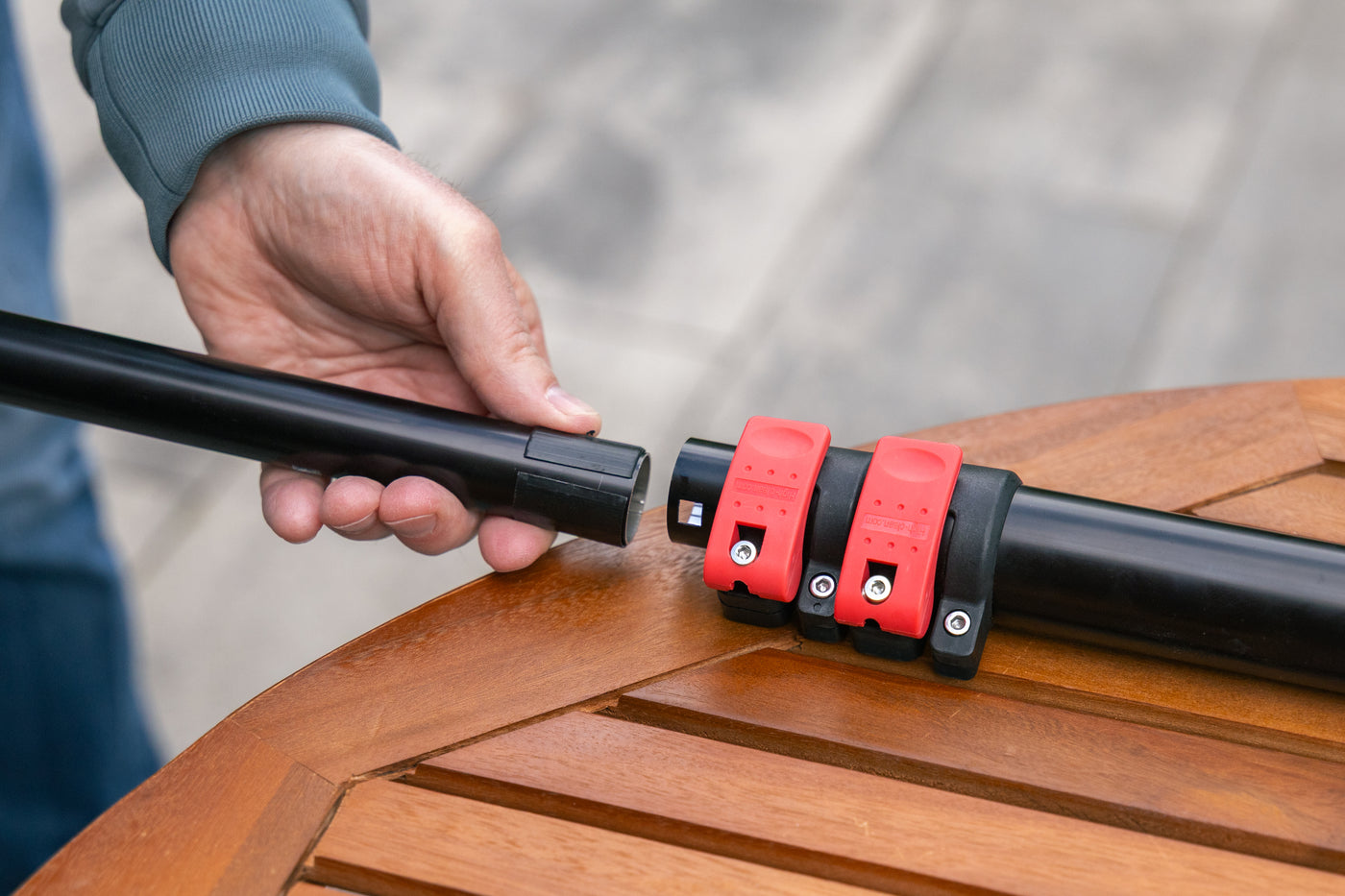
How does cleaning support good solar-panel output?
Dirt can block some of the sunlight that needs to reach the solar panel. Localised soiling caused by bird droppings, leaves or stubborn deposits can be particularly disruptive. Regular checks help you identify this type of dirt in good time.
The precise effect of dirt on output varies by system, location, angle of inclination and type of soiling. Clean based on the visible condition of your panels and the manufacturer’s maintenance instructions, rather than according to a fixed promise of increased output.
For light dirt, water and a soft all-round brush are often sufficient. For bird droppings, greasy deposits or stubborn dirt, you can use a suitable solar panel cleaning product.
Telescopic poles for cleaning solar panels
-
Added to wishlist
-
-
Added to wishlist
-
-
Added to wishlist
-
-
Added to wishlist
-

What tools do you need for cleaning solar panels?
To clean solar panels safely, you mainly need sufficient reach, a soft brush and a consistent water supply.
Preferably use:
- a telescopic pole with sufficient working height;
- a soft telescopic brush or suitable attachment;
- a water hose for the telescopic pole;
- a ball valve to control the water supply;
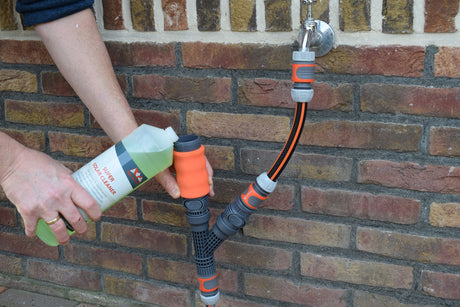
- a soap dispenser to add cleaning agent to the water;
- clean water, preferably low in limescale;
- the Pure Water HCPW557 pure-water filter if your tap water is hard;
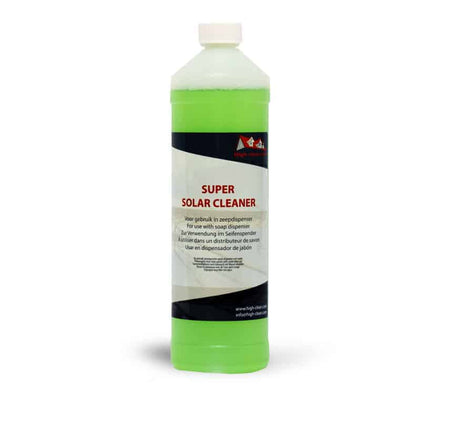
- optionally Super Solar Cleaner for stubborn dirt.
Do not choose the pole length based only on the height of the roof. Also take into account the distance from the façade to the furthest solar panel. Extra reach prevents you from having to overextend yourself while working.
Want to compare different materials and lengths? Visit the compare telescopic poles page or use the online selection guide.
For assembly, maintenance and safe extension, also see the telescopic pole manual. If you need a replacement part, go to parts and repairs.
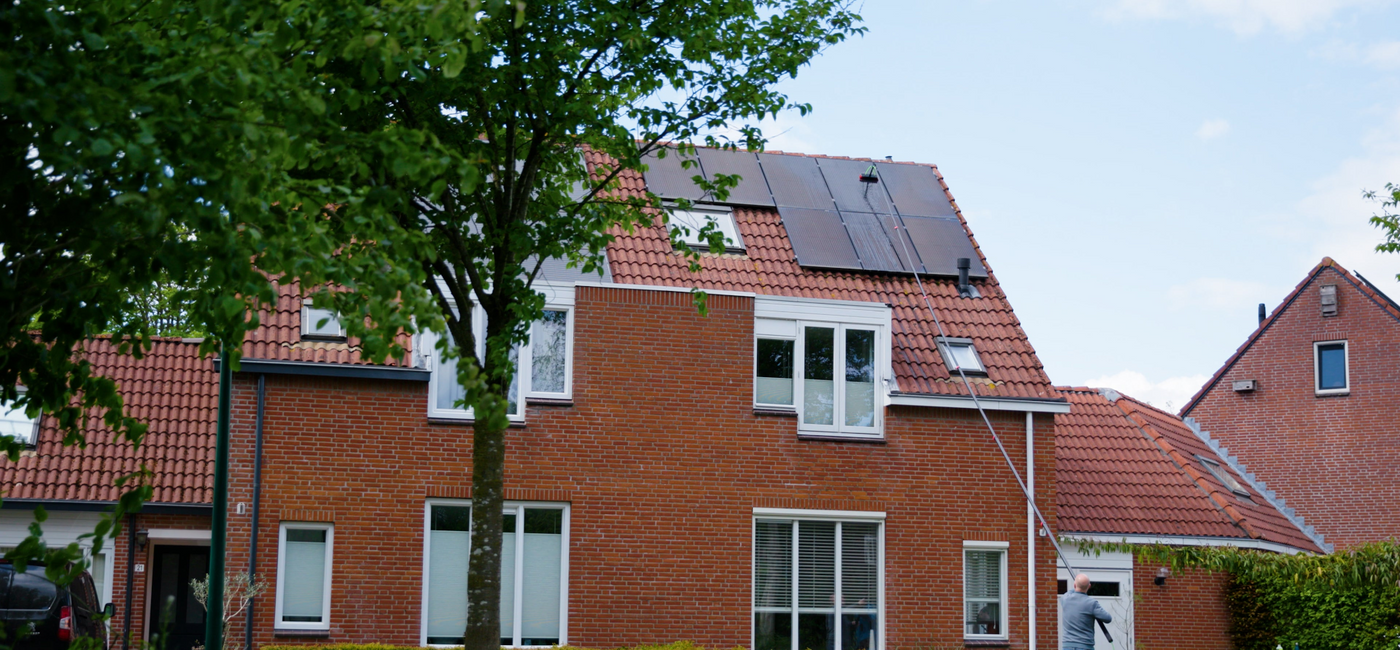
Step-by-step guide to cleaning solar panels
Step 1: check the work area
Check whether you can safely reach all panels from the ground. Inspect the installation for visible damage and do not touch cables or connections. Choose a telescopic pole with sufficient reach so you do not have to overextend yourself.
Step 2: remove loose dirt
Carefully remove leaves and rinse dust, sand and pollen thoroughly from the surface. Use the water hose in your telescopic pole or view the available hoses and connectors.
Step 3: soak stubborn dirt
Thoroughly wet bird droppings and stuck-on deposits. Give the water a few minutes to loosen the dirt. For stubborn contamination, you can add Super Solar Cleaner to the water via a soap dispenser.
Step 4: use a soft brush
Move a soft telescopic brush gently over the panels. Use little pressure and let the combination of water and soft bristles do the work.
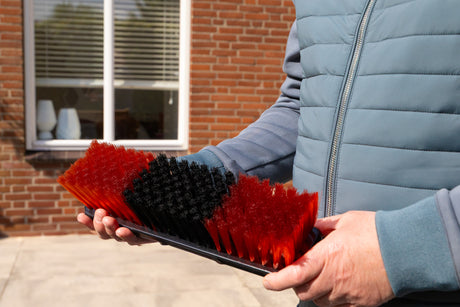
An all-round brush is suitable for even cleaning. A five-sided brush also makes it easier to reach edges and sides.
Step 5: rinse thoroughly
Completely remove loosened dirt and any cleaning-agent residue. If desired, use the Pure Water HCPW557 system to reduce the risk of limescale marks. Then allow the solar panels to air-dry.
Want to see the method first? Watch the High-Clean instruction videos.
Telescopic poles for cleaning solar panels
-
Added to wishlist
-
-
Added to wishlist
-
-
Added to wishlist
-
-
Added to wishlist
-

What water and cleaning agent should you use?
For light dirt, clean water is often sufficient. Water that is low in limescale or filtered reduces the chance of minerals leaving visible marks after drying. With the Pure Water HCPW557 pure-water filter, you filter tap water for a clean result with less risk of limescale residue.
For bird droppings, greasy deposits or stubborn dirt, you can use Super Solar Cleaner for solar panels. Dose the product according to the instructions and add it to the water supply with a soap dispenser.
Want to rinse with water only first and add cleaning agent afterwards? The switch on the soap dispenser lets you decide when the product is mixed with the water.
Do not use aggressive all-purpose cleaner, solvents or abrasive products. View the full range of cleaning agents for telescopic poles for suitable products.
Note: do not use a pressure washer. The powerful water jet can damage seals, connections and other components.

Why is regular inspection important?
Solar panels are sometimes described as self-cleaning because rain can wash away loose dust and light dirt. However, rain does not always remove bird droppings, algae and green deposits, greasy contamination or dirt that collects around the edges.
Check regularly that all panels are evenly clean. Pay particular attention to panels near trees, busy roads, agricultural land and industrial areas. Solar panels installed at a shallow angle are also more likely to retain dirt and water.
While cleaning, inspect your equipment as well. View our telescopic pole parts when a clamp, guide, hose or adapter needs replacing. This helps keep your telescopic pole safe and comfortable to use.
Do you have a question about use, maintenance or compatibility? See the frequently asked questions about telescopic poles, read the manual or contact High-Clean customer service.
Would you like to clean your solar panels safely and easily yourself? Choose a telescopic pole with sufficient reach, a soft brush and a suitable water supply. Browse our telescopic poles for solar panels, compare aluminium, Carbon Fiber and 3K Full Carbon, or use the selection guide to find the right set.
Frequently asked questions about cleaning solar panels
How can I clean solar panels without going onto the roof?
How can I clean solar panels without going onto the roof?
Use a telescopic pole for solar panels with a soft, water-fed brush. Choose a pole that lets you reach even the furthest panel while keeping both feet safely on the ground. The selection guide will help you choose the right version.
Can I clean solar panels with tap water?
Can I clean solar panels with tap water?
Yes, but tap water can leave limescale spots after it dries. Work when the panels are cool and rinse thoroughly. A water softener or the Pure Water HCPW557 system helps reduce visible residue.
Which brush is suitable for cleaning solar panels?
Which brush is suitable for cleaning solar panels?
Use a clean brush with soft bristles that will not damage the surface. An all-round telescopic brush is suitable for the panel surface, while a five-sided brush makes it easier to reach the edges as well. View all telescopic brushes and attachments.
Which cleaning product can I use for solar panels?
Which cleaning product can I use for solar panels?
For light dirt, water is usually sufficient. For stubborn contamination, you can use Super Solar Cleaner. If needed, add the product to the water supply with a soap dispenser, then rinse the panels thoroughly.
Can I clean solar panels with a pressure washer?
Can I clean solar panels with a pressure washer?
No. A pressure washer is not recommended. The powerful jet can damage seals, connections and other components. Use a telescopic pole with a soft brush, an even water supply and as little pressure as possible.