



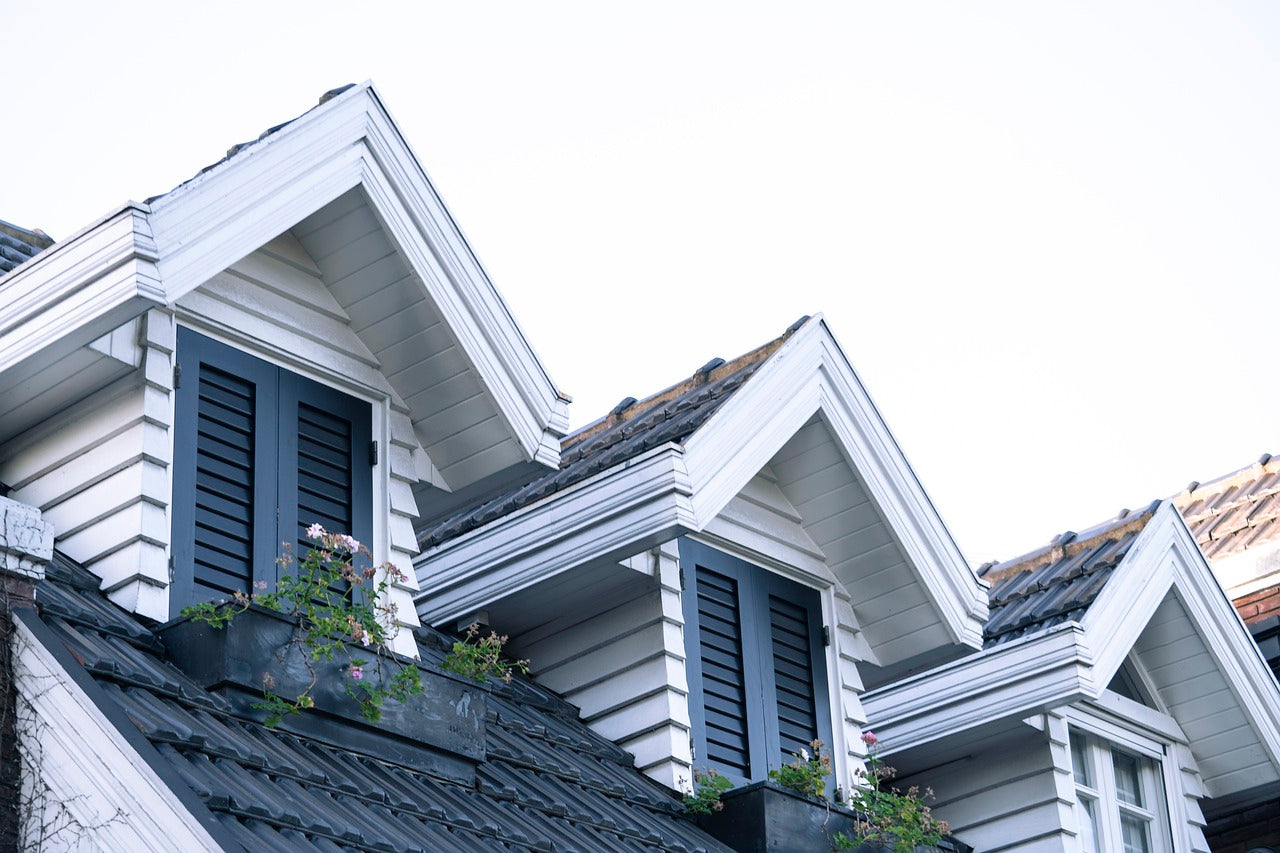

What do you need to clean a dormer?
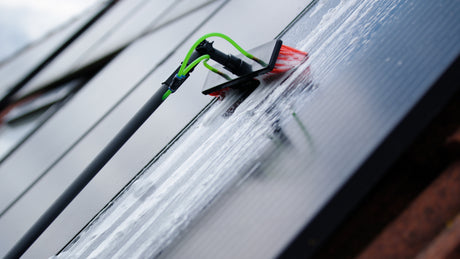
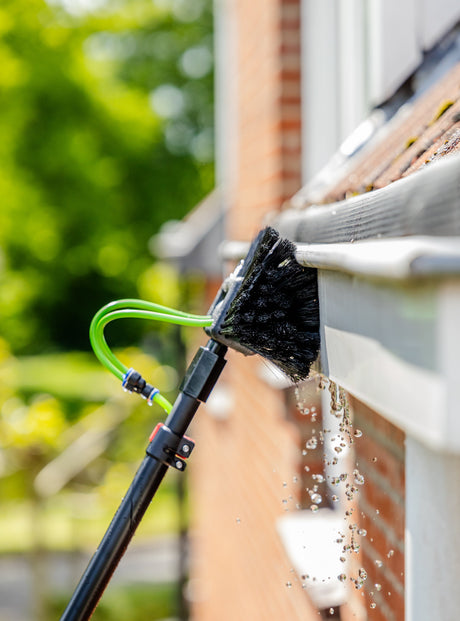
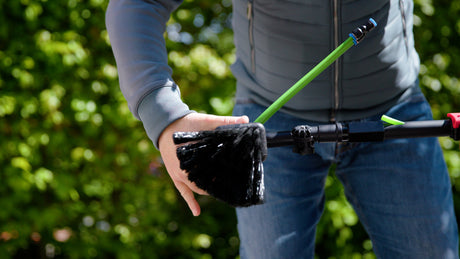
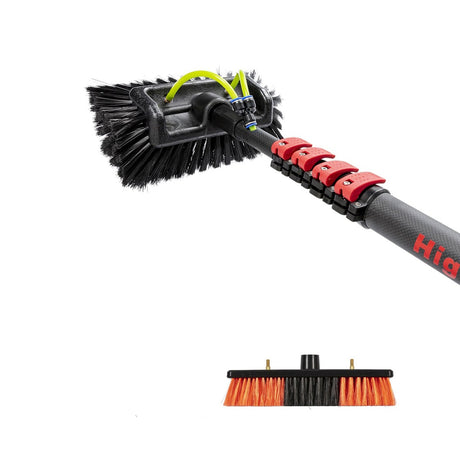
For most dormers, you will need a telescopic pole, a water-fed brush, a garden hose and, if required, a suitable cleaning solution. A five-sided brush is practical for profiles, corners, window frames and the undersides of projecting parts. The bristles are fitted on several sides, so you need to change your working angle less often.
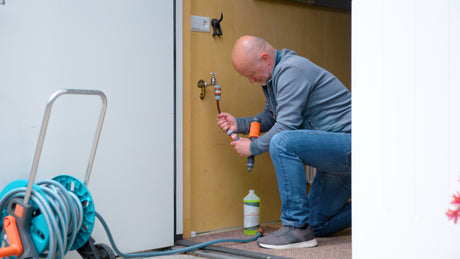
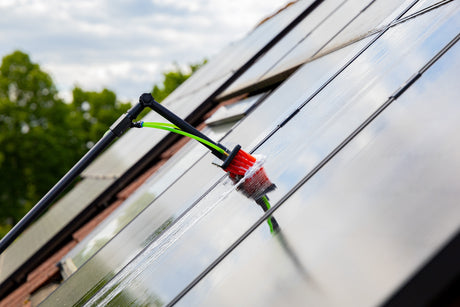
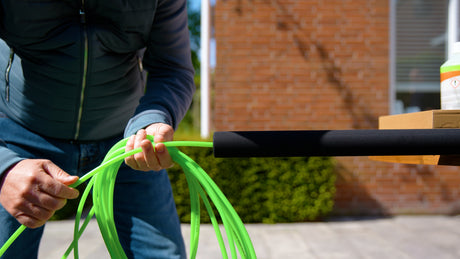
Also check that your hose and tap connector are compatible with the set. The hoses and water supply collection contains parts that carry water through the telescopic pole to the brush. This allows you to wet the dirt, brush it loose and rinse it straight off the surface.
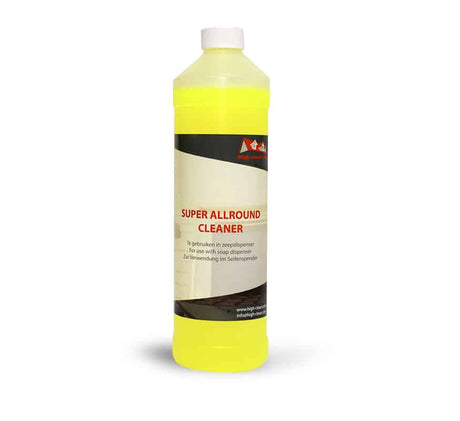
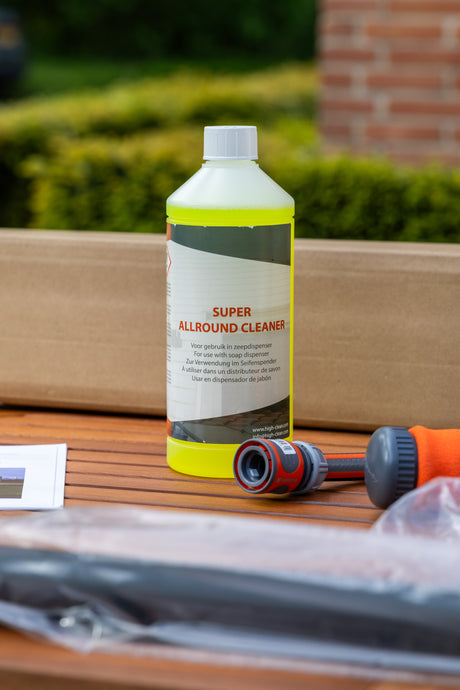
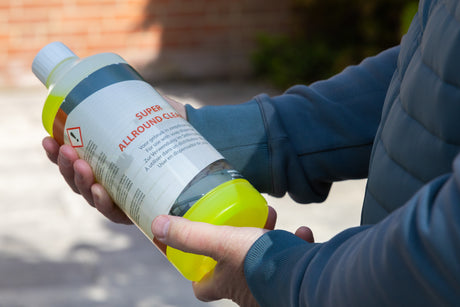
Only use a cleaning solution that is suitable for the material of your dormer. High-Clean offers Super Allround Cleaner for materials including plastic, woodwork and Trespa. Always read the label before use, follow the recommended dosage and test the product on a small, inconspicuous area first.

Clean a dormer yourself in 6 steps
- Inspect the dormer from the ground. Check the material, loose parts, sealant joints and accessibility. Have damaged or inaccessible parts assessed first.
- Choose a calm, cloudy day. Bright sunlight can cause water and cleaning solution to dry quickly. Do not work in strong winds, icy conditions or thunderstorms.
- Set up the telescopic pole securely. Extend only the sections you need and maintain the prescribed overlap between the sections. If in doubt, consult the telescopic pole manual.
- Rinse away loose dirt. Wet the surface from top to bottom. This removes sand and other loose dirt before you begin brushing.
- Brush with gentle movements. Work on one small area at a time and do not apply unnecessarily high pressure. Pay extra attention to corners, profiles and edges where dirt accumulates.
- Rinse thoroughly. Remove any remaining dirt and cleaning solution with clean water. Check the result from several angles once the surface has dried.
When cleaning the dormer, keep the telescopic pole angled in front of you as much as possible and move along with the work area. This keeps the brush easier to control than trying to work far to one side from a single position.
Products for cleaning a dormer
-
Added to wishlist
-
-
Added to wishlist
-
-
Added to wishlist
-
-
Added to wishlist
-








Which telescopic pole should you use to clean a dormer?
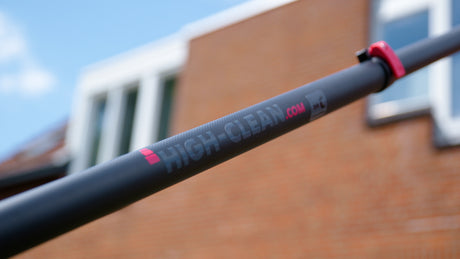
Choose your telescopic pole based on the required working height, the distance from the facade and the duration of the job. Measure not only the vertical height but also account for the diagonal working angle and obstacles such as an extension, bay window or patio cover. Do not choose an unnecessarily long pole: a length that suits the job generally provides better control.
Aluminium for occasional use
An aluminium telescopic pole with five-sided brush is an affordable choice for regular maintenance around the home. This version is available from 3.6 metres. Aluminium is heavier than carbon, which is particularly noticeable during prolonged use or when the pole is extended a long way.
Carbon Fiber for greater working comfort
A Carbon Fiber telescopic pole with five-sided brush is lighter than a comparable aluminium pole. This reduces strain when cleaning larger dormers or working at height frequently. This version is available in lengths from 5.4 to 12.8 metres.
3K Full Carbon for greater heights and more intensive use
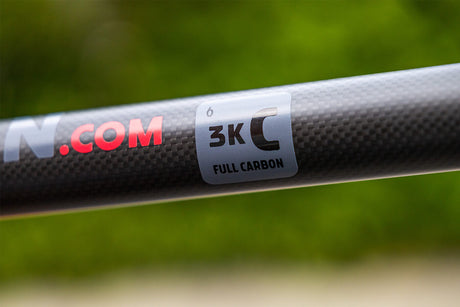
A 3K Full Carbon telescopic pole with five-sided brush combines a wider choice of lengths with low weight. The range runs from 5.4 to 18.2 metres. The longest pole is not automatically the best choice: choose the shortest model that allows you to reach the entire work area safely.
Unsure about the material, brush or length? Use the online telescopic pole advisor tool.

Cleaning a plastic or wooden dormer
For a plastic dormer, use water, a soft suitable brush and, if required, a cleaning solution specifically approved for plastic. Do not use an abrasive pad or excessive pressure. Clean joints and profiles carefully, but avoid forcing dirt deep into gaps.
For painted woodwork, check the condition of the paint first. Flaking paint, soft spots or open joints require maintenance before cleaning. Brush gently and do not use aggressive cleaning solutions. Read more about cleaning woodwork with a telescopic pole.
For Trespa, composite or other sheet materials, also check the manufacturer's maintenance instructions. Materials that look similar may require a different dosage or cleaning method.

How often should you clean a dormer?
Cleaning frequency depends on the location, material and amount of dirt. Inspect the dormer at least once a year. More frequent cleaning may be required near trees, a busy road or the coast. Visible deposits, bird droppings, green growth or dirty profiles are signs that it is time to clean.
Remove localised dirt before it spreads. Regular light maintenance generally requires less brushing than removing heavy deposits. Cleaning does not replace technical maintenance of paint, sealants, fasteners or roof covering.

Clean your dormer safely from the ground
Working from the ground reduces the need for a ladder or access to the roof, but you still need a stable working area and a telescopic pole that you can control. Keep away from traffic, bystanders, facade lighting and electrical cables. Hire a professional if you cannot reach or control the surface safely.
- Never work in strong winds, thunderstorms, frost or on slippery ground.
- Check the connectors, clamps, hose and brush before use.
- Do not extend the pole farther than necessary.
- Do not direct water at vents, damaged joints or open windows for a prolonged period.
- Do not use high pressure on vulnerable sealants, paint or plastic parts.
- Follow the product manual and the dormer manufacturer's instructions.
Clean your dormer with the right telescopic pole
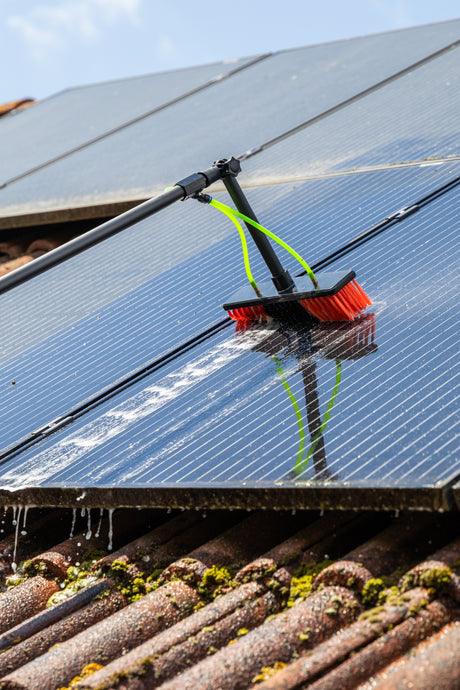
With a suitable telescopic pole, a water-fed five-sided brush and a controlled method, you can maintain the accessible parts of your dormer from the ground. Compare High-Clean telescopic poles and choose the length and material that suit your home and how often you intend to use it.
Frequently asked questions about cleaning a dormer
Can I clean my dormer myself?
Can I clean my dormer myself?
Yes, provided that all surfaces are accessible from a stable position and you can use the telescopic pole in a controlled manner. Hire a professional if there is damage, access is very difficult or the work still requires you to go onto the roof.
Which brush is suitable for a dormer?
Which brush is suitable for a dormer?
A soft, water-fed five-sided brush is practical for flat surfaces, edges and profiles. Before use, always check that the brush is suitable for the material and the condition of the finish.
Can I clean a plastic dormer with washing-up liquid?
Can I clean a plastic dormer with washing-up liquid?
Preferably use a cleaning solution that is explicitly stated to be suitable for the relevant plastic. A general household product may contain additives that cause streaks or have an undesirable effect on the finish.
Can I clean my dormer with a pressure washer?
Can I clean my dormer with a pressure washer?
A powerful jet can force water behind joints or damage vulnerable paint, sealant and plastic parts. A telescopic pole with a water-fed brush gives you more control over local pressure and the water supply.
What length of telescopic pole do I need?
What length of telescopic pole do I need?
That depends on the vertical height, the distance from the facade and your working angle. Measure the situation in advance and choose the shortest pole that allows you to reach the top edge properly. If in doubt, use the High-Clean advisor tool.
Do I need to dry the dormer windows?
Do I need to dry the dormer windows?
That depends on the water quality and the result you want. Limescale in tap water can leave visible marks after drying. A suitable window-cleaning attachment or low-limescale water can therefore be useful for glass. Use our water softener for this purpose.